





SAP-Backed Tereina Launches SAP Pay to Enable Payments Directly Within Enterprise Software
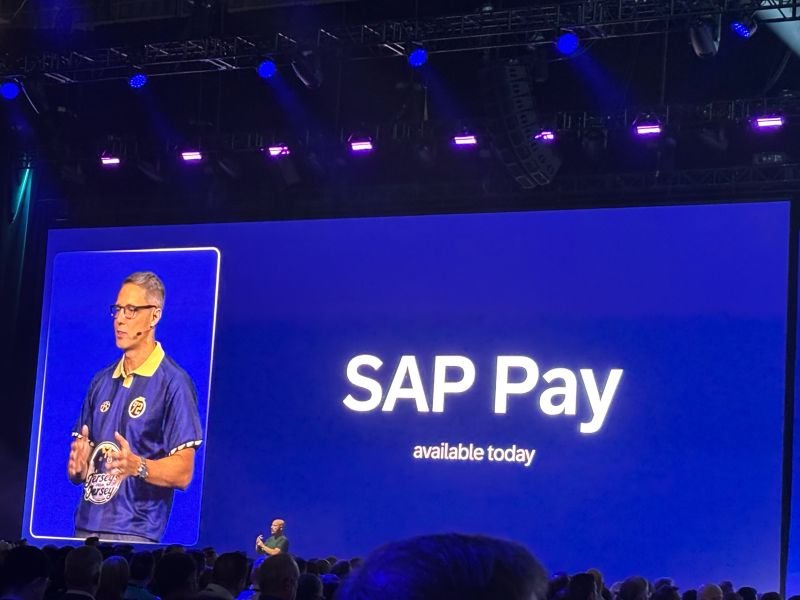
SAP-Backed Tereina Launches SAP Pay to Transform Enterprise Payments
SAP-backed payments company Tereina has launched SAP Pay, a service designed to enable businesses to pay suppliers, employees and other business partners directly from SAP enterprise software. Announced on October 6, 2026, the offering introduces embedded payment capabilities into an environment traditionally used to manage financial records, invoices and business transactions.
The launch marks a strategic expansion of SAP’s role in enterprise finance. Rather than requiring customers to rely exclusively on separately connected payment providers, SAP Pay aims to bring payment execution closer to the financial workflows organizations already use.
According to Reuters, the service supports transactions in traditional currencies as well as stablecoins, offering businesses additional options for handling payments through their enterprise software.
Payments Integrated into Existing ERP Workflows
Enterprise resource planning systems help organizations manage accounts payable, receivables, cash positions and other financial activities. However, completing a payment has often required additional steps involving banking portals, payment service providers or external payment systems.
These separate processes can introduce manual work, create reconciliation delays and make it more difficult for finance teams to maintain a consistent view of transactions.
SAP Pay is designed to reduce these handoffs by embedding payment functionality within SAP’s business software. Businesses can connect payment activities more closely with their existing financial processes, potentially simplifying the movement of money and the subsequent reconciliation of transactions.
Tereina CEO Cedric Bru compared the concept to Apple Pay, describing it as a payment service integrated into the software environment in which users already operate.
Supporting Traditional Currencies and Stablecoins
One of SAP Pay’s notable features is its support for traditional payment methods alongside stablecoin transactions.
Traditional business payments remain essential for supplier settlements, employee payments and other corporate financial obligations. Stablecoins, which are digital tokens designed to maintain a relatively stable value against a reference asset, offer another potential mechanism for transferring funds, particularly in certain cross-border payment scenarios.
By supporting multiple payment options, SAP Pay aims to give organizations greater flexibility in how transactions are executed.
However, the suitability of stablecoin payments depends on factors such as regulatory requirements, counterparty acceptance, treasury policies and the availability of appropriate payment infrastructure.
Tereina’s Role in SAP’s Payments Strategy
Tereina is a payments company in which SAP holds an ownership stake. The company developed SAP Pay to connect payment services with SAP’s enterprise software environment.
Reuters reported that Bru did not disclose the size of SAP’s stake in Tereina. The company also indicated that it works with other payment providers rather than attempting to replace them entirely.
This approach could allow SAP to expand its financial services capabilities while continuing to work with the wider payments ecosystem.
The service also creates an opportunity for SAP to connect transaction records, payment execution and reconciliation more closely, potentially helping finance teams reduce manual processing and improve visibility across financial operations.
Potential Benefits for Finance Teams
Embedded payments could offer several operational benefits for organizations using SAP software.
First, reducing the need to switch between ERP applications and external payment interfaces may simplify accounts payable workflows. Second, connecting payment execution with financial records can help improve reconciliation and transaction tracking. Third, consolidating payment processes may help organizations assess their payment costs more effectively.
Tereina claims its approach can reduce payment costs by 25%. This should be treated as a company claim rather than a guaranteed outcome, since savings will vary according to transaction volumes, payment methods, provider fees and implementation arrangements.
Organizations considering embedded payments should also assess security controls, authorization processes, compliance requirements and the implications of adding another payment service to their financial infrastructure.
Conclusion
The launch of SAP Pay signals a new direction for SAP’s enterprise finance strategy, extending its role beyond recording and managing financial transactions toward facilitating payment execution within business software.
By connecting traditional payment methods and stablecoin transactions with existing SAP workflows, Tereina aims to simplify business payments and reduce friction between financial systems.
For organizations using SAP ERP, the key question will be whether embedded payment capabilities can deliver measurable improvements in processing efficiency, reconciliation, cost control and financial visibility. Adoption will ultimately depend on the service’s suitability for each organization’s payment requirements, regulatory environment and existing technology landscape.
Key Takeaways
- Embedded payments: Tereina has launched SAP Pay, enabling businesses to make payments directly through SAP software.
- Multiple payment methods: The service supports traditional currencies and stablecoin transactions.
- Simplified financial workflows: Businesses can connect payment execution with existing ERP-based financial processes.
- Existing customer access: SAP customers can subscribe to SAP Pay through their existing contracts, according to Reuters.
- Potential cost savings: Tereina claims its approach can reduce payment costs by 25%, although actual savings will depend on each organization’s payment environment.